Lagos State Bans Styrofoam to Protect Residents and the Environment
On Sunday 28 January 2024 the Lagos State Government took a decisive step to protect its residents and the environment by prohibiting the use and distribution of Styrofoam and other single-use plastics within the state. This decision, announced by Tokunbo Wahab, the Commissioner of Environment and Works, aims to address the menace of plastic waste in Lagos, Nigeria’s vivacious economic capital and most populous city in Africa.

Abe Bridge (Under Bridge). © Benson Ibeabuchi
Styrofoam boxes and single-use plastics have become common-place on the streets of Lagos, from trash-strewn pavements and gutters to street vendors packing hot meals into polystyrene containers. The ban, which took many Lagosians by surprise, is a welcome move for environmentalists who believe it can significantly reduce waste and carbon emissions. However, some critics question the feasibility of an immediate ban, especially for businesses that rely on these materials for their livelihoods. The transition from polystyrene boxes would be a challenge, but it is a step toward a cleaner and more sustainable Lagos.
Nigerian fast-food chain Food Concepts, known for its popular restaurants Chicken Republic, PieXpress and The Chopbox, has already applauded the measure and encourages its customers to bring their own containers. The NGO Initiative for Climate and Ecological Protection emphasizes that proper management of the action plan is crucial for success. In a megacity with over 20 million inhabitants, effective waste management is essential to prevent blocked sewers, floods, and the proliferation of mosquitoes during the rainy season. Nigeria is one of largest importers and consumers of plastics with over 130,000 tonnes ending up in Nigerian waters each year. It has been estimated that its consumption and import could exceed 40 million tonnes by 2030 if nothing is done, with a significant volume ending up in its aquatic system. Plastic bottles, Styrofoam packs, plastic bags, and plastic sachets (popularly referred to as “pure water”) are the usual suspects. Styrofoam is the first to fall among the ignoble ilk of pollutants. Is this the first of other bans? Activists have advocated for more bans and adoption of more environmentally friendly options like paper bags and glass bottles. Will the Government yield? Only time would tell.
The Lagos State Styrofoam Ban, albeit a bold step aims to create a cleaner, greener environment for its residents and set an example for other cities facing similar challenges across the Country and the globe. 🌍🌱
Why is Styrofoam Bad
Styrofoam, also known as polystyrene foam, has a significant negative impact on humans and the environment. Let’s delve into the reasons why:
I Health Concerns for Humans
- Carcinogenic Potential: Styrofoam contains a chemical compound called styrene, which has been classified as a “possible human carcinogen” by the International Agency for Research on Cancer. The National Toxicology Program (NTP) also states that styrene is “reasonably anticipated to be a carcinogen.” Long-term exposure to styrene in the workplace increases the risk of leukaemia, lymphoma, and genetic damage in white blood cells
- Central Nervous System Effects: Exposure to styrene can lead to symptoms such as headaches, fatigue, dizziness, confusion, and difficulty concentrating. It affects the central nervous system and can cause nerve damage.
- Environmental Impact: Styrofoam contributes to environmental pollution. Of the nearly 20 million pounds of waste styrene generated annually, approximately 17.8 million pounds end up in the air, and 1.7 million pounds enter surface waters. Polystyrene foam from coffee cups and food containers clogs landfills and even reaches the ocean, where marine animals ingest it.
- Avoiding Styrofoam Use: While using styrene foam cups for cold drinks is likely safe, it’s best to avoid using them for hot coffee or tea. Look for the recycling symbol with the number 6 to identify polystyrene containers. Opting for reusable coffee cups and containers is better for both your health and the planet.
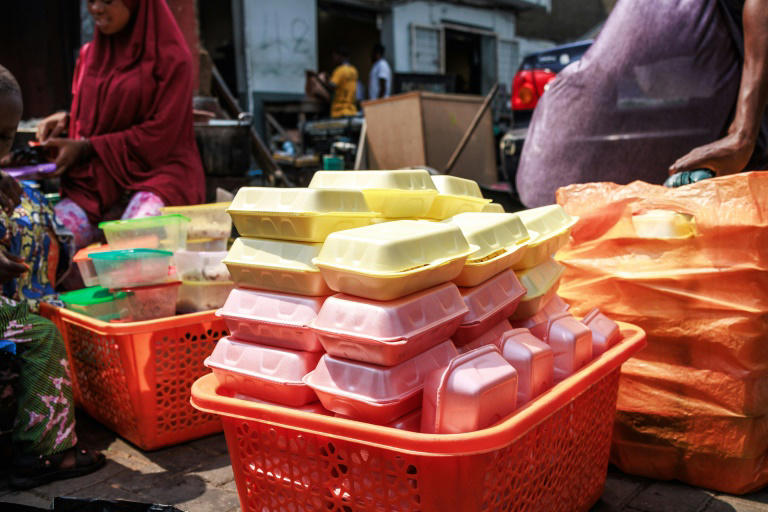
Styrofoam Takeaway Food Pack © Benson Ibeabuchi
II Climate Change and environmental Concerns
- Non-Biodegradability and Non-Recyclable: Styrofoam is non-biodegradable, meaning it takes an astonishingly long time to decompose. In fact, it can persist in the environment for up to 1 million years. This longevity exacerbates the problem of waste accumulation.
The UNEP has done extensive work to raise awareness about the menace of single-use plastics.
- Landfill Overload: Styrofoam products fill approximately 30% of landfills globally. Each day, around 1,369 tons of Styrofoam end up buried in U.S. landfills. As landfills approach capacity, this becomes a pressing concern. Styrofoam often escapes the waste collection system and accumulates on land and water because it is easily wind-blown.
- Toxic Pollutants: Styrofoam contains a chemical called styrene, which can leach into food and drinks served in Styrofoam containers. When exposed to sunlight, Styrofoam releases harmful air pollutants that contaminate landfills and contribute to ozone layer depletion.
- Environmental Impact: Styrofoam is a significant contributor to climate change and environmental pollution. Styrofoam poses a threat to animals scavenging for food in landfills. The material easily breaks apart into small pieces that can choke animals.
- Manufacturing Process: During Styrofoam production, large amounts of ozone are released into the atmosphere, leading to respiratory and environmental issues.
In summary, Styrofoam harms both humans and the environment. It’s crucial to reduce our use of this harmful material and explore more sustainable alternatives. Many cities and countries have already taken steps to ban commercial Styrofoam use, recognizing its detrimental effects.
Remember, reducing the use of containers made with polystyrene benefits not only your health but also the environment 🌎🌿. #climatechange #climateaction #UNEP
The Lagos State Styrofoam is a step in the right direction, even though it has been met with applause and concerns by Businesses and Environmental Activists alike. The directive would require re-education of food vendors and sellers of takeaway packs including members of the public. I am not sure it would be easy to bring about a culture change in respect of a practice that has lingered for such a long time and has become part and parcel of Lagos and her people. Lagosians love their party packs and takeaway food packs. They have become so ubiquitous over the years. It would be interesting to see as things unfold within the next few months as the Government begins to clamp down on defaulters. As an ex-Las Gidi resident, I can appreciate where the authorities are coming from. I wish them godspeed on this one. Eko oni baje !
#leadership #goodgovernance
 WODI & WODI